Computer Vision × Drones: Making Tank Exterior Inspection Unmanned
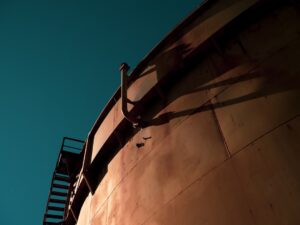
Large storage tanks at petroleum and chemical plants demand periodic exterior inspection for corrosion and coating degradation. It is a fundamental maintenance task, yet it comes with serious height-related risks and enormous scaffolding costs. Rapid advances in drones (UAVs) and computer vision are now turning "unmanned exterior inspection" into reality. This article explains how CV-powered drone systems work, the latest developments, and key points for practical deployment.
Challenges of Conventional High-Elevation Tank Inspection
Exterior inspection of tanks 10–20 m tall has traditionally required scaffolding or aerial work platforms with direct human access. The drawbacks:
- Falling hazard: Inspectors climbing the tank shell face serious risk of accidents.
- Cost and duration: Scaffold erection and removal take days or weeks and can cost millions of yen.
- Inconsistent quality: Coverage depends on operator skill, and record standardization is difficult.
How Drone + Computer Vision Systems Work
A typical CV-powered drone inspection system consists of: (1) a UAV platform with a high-resolution RGB camera (often combined with thermal or multispectral sensors), (2) pre-programmed autonomous flight plans around the tank, (3) onboard or cloud-based CV models that detect coating damage, corrosion patches, discoloration, and weld-seam defects, and (4) orthomosaic reporting that stitches captured images into a geometric map of the tank shell.
Models are typically CNN-based (YOLO family, U-Net) trained on thousands of annotated field images. Recent published datasets report detection accuracies above 90% on coating defects and rust, sufficient for reliable screening and prioritization of follow-up close inspection.
Benefits and Current Limitations
- Safety: No scaffold work or roof access required, reducing high-altitude incidents to near zero.
- Time and cost: What used to take 2–3 weeks of preparation can be completed in a single day, at a fraction of the cost.
- Standardized records: Every image is geo-tagged, enabling before/after comparison across years.
- Limitations: Wind conditions, GPS signal stability inside refineries, hazardous-area (ATEX/explosion-proof) certification, and regulatory clearance for drone flight above industrial facilities.
Deployment Tips for Plant Operators
Practical adoption requires coordinating safety procedures, pilot qualifications, and drone hardware certified for hazardous environments. Many operators start with above-ground storage tanks in non-classified areas, gradually expanding to process-unit inspections as internal capability matures. Combining drone CV with traditional close-contact VT (visual testing) by experienced inspectors offers the best balance of coverage and defect certainty.
Summary
Drones combined with computer vision reduce falling hazards to near zero, cut inspection cost and time dramatically, and provide standardized multi-year records. The technology is already mature for tank exterior inspection, and adoption will accelerate as hazardous-area-certified drones become more available. Urisol Inc. partners with drone inspection specialists to deliver integrated services that combine unmanned screening with traditional VT expertise.
References
- IEEE Xplore, "Deep learning–based defect detection for storage tank exteriors using UAV imagery." https://ieeexplore.ieee.org/
- ASNT Pulse, "The Role of Drones in NDT Inspection." https://www.asnt.org/
- Flyability, "Drone Inspection in Oil & Gas." https://www.flyability.com/industries/oil-and-gas
- Skydio, "Autonomous Drone Inspection for Industrial Assets." https://www.skydio.com/industrial-inspection
- MDPI Sensors, "UAV-Based Visual Inspection of Industrial Storage Tanks" (2024). https://www.mdpi.com/journal/sensors
Follow me!